
The patient journey often begins with an online query. In fact, Tebra's 2025 Patient Perspectives survey found that 79% of patients look online often or sometimes to find out about doctors or medical care. While artificial intelligence chatbots are increasingly popular, only 5% of adults are "very confident" that they provide accurate information, according to a KFF poll. This means that search engines remain a critical tool for practice growth; the same survey reveals that Google is the top source patients use to look for reviews of healthcare providers.
We’ve created the following checklist to help you evaluate your practice's strengths. Review each section to see what you’re doing right to attract new patients and deliver an experience that keeps them coming back. Any box left unchecked is an opportunity to grow your practice in 2026 and beyond.
TL;DR: To achieve sustainable growth in 2026, private practices must focus on 5 key areas: building a high-performing website that converts visitors, strengthening their online reputation to build trust, modernizing the patient experience with digital tools, streamlining front-office operations for maximum efficiency, and tracking performance metrics to refine strategy.
1. Build a high-performing medical practice website
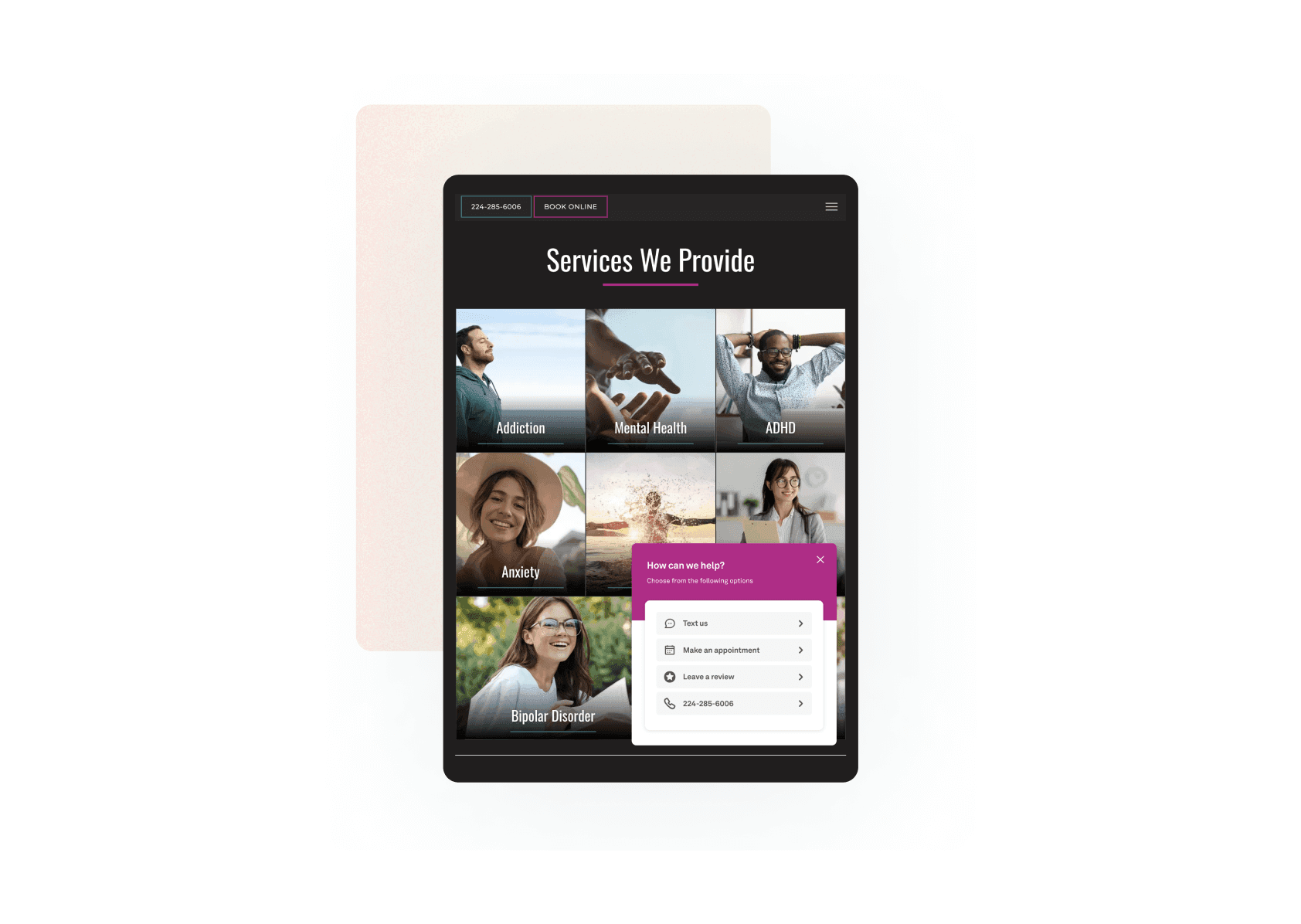
Your website is often the first place a prospective patient interacts with your brand. According to Tebra’s 2025 Patient Perspectives survey, 44% of patients say a practice’s website contributes to their decision when choosing a provider.
But a great website isn't only about look and feel. It must be built to help search engines find you. This is search engine optimization (SEO), a key element of an effective medical marketing strategy.
Fully optimizing your site — for patients and search engines — requires understanding how search engines and AI overviews work, writing exceptional copy, and providing clear paths for visitors to take action, whether to book an appointment online or call your front desk.


"44% of patients say a practice’s website contributes to their decision when choosing a provider."
Improve visibility with SEO and clear service pages
- Create clear, helpful titles on every page, along with engaging meta descriptions and URLs that contain keywords related to specific patient search queries.
- Feature rich, descriptive content about your services, dedicating a single page to each one.
- Make sure your medical practice website is mobile responsive and can adapt to any browser size.
- Confirm that your pages load quickly to minimize visitors abandoning your site due to slow load times.
Create a modern, professional online presence
- Bring your practice to life with high-quality photos that showcase your office (interior and exterior), staff, and services.
- Feature positive testimonials that demonstrate high patient satisfaction.
- Publish blog posts that establish your medical expertise — and personality — and answer patients’ most common questions related to your specialty.
Convert visitors into booked patients
- Include prominent calls to action (CTAs) that influence patients to book an appointment immediately.
- Offer online scheduling through your website, making it easy for patients to schedule or request a visit.
- Feature your phone number in text, not an image, so patients can call your practice with a single click.
- Give patients the option to text message you directly from your website for quick inquiries.
Make your website the digital hub of your practice operations
- Choose a clean, user-friendly design so patients can easily navigate your website to find what they need.
- Offer patients a variety of ways to contact your practice and display them prominently on your homepage.
- Implement convenient patient self-service opportunities in addition to online booking, such as digital intake and online bill pay.
2. Strengthen your online presence and reputation
Your online reputation is your digital word-of-mouth, and it’s one of the most powerful tools for practice growth. According to Tebra’s 2025 Patient Perspectives survey, 77% of patients read online reviews before choosing a doctor and 51% rank them as a top-3 factor in their decision. Proactively managing your presence ensures that prospective patients see an accurate, trustworthy, and positive reflection of your practice.
"77% of patients read online reviews before choosing a doctor."
Own your profiles on healthcare, business, and directory websites
- Claim each professional profile on every website that lists your practice and providers (e.g., Healthgrades, Yelp, Vitals).
- Ensure your contact information (name, address, phone number, and website URL) and business hours are correct and consistent across all listings.
- Optimize each profile with detailed content about you and your practice, as well as high-quality, recent photos.
Claim and audit your practice’s Google Business Profile
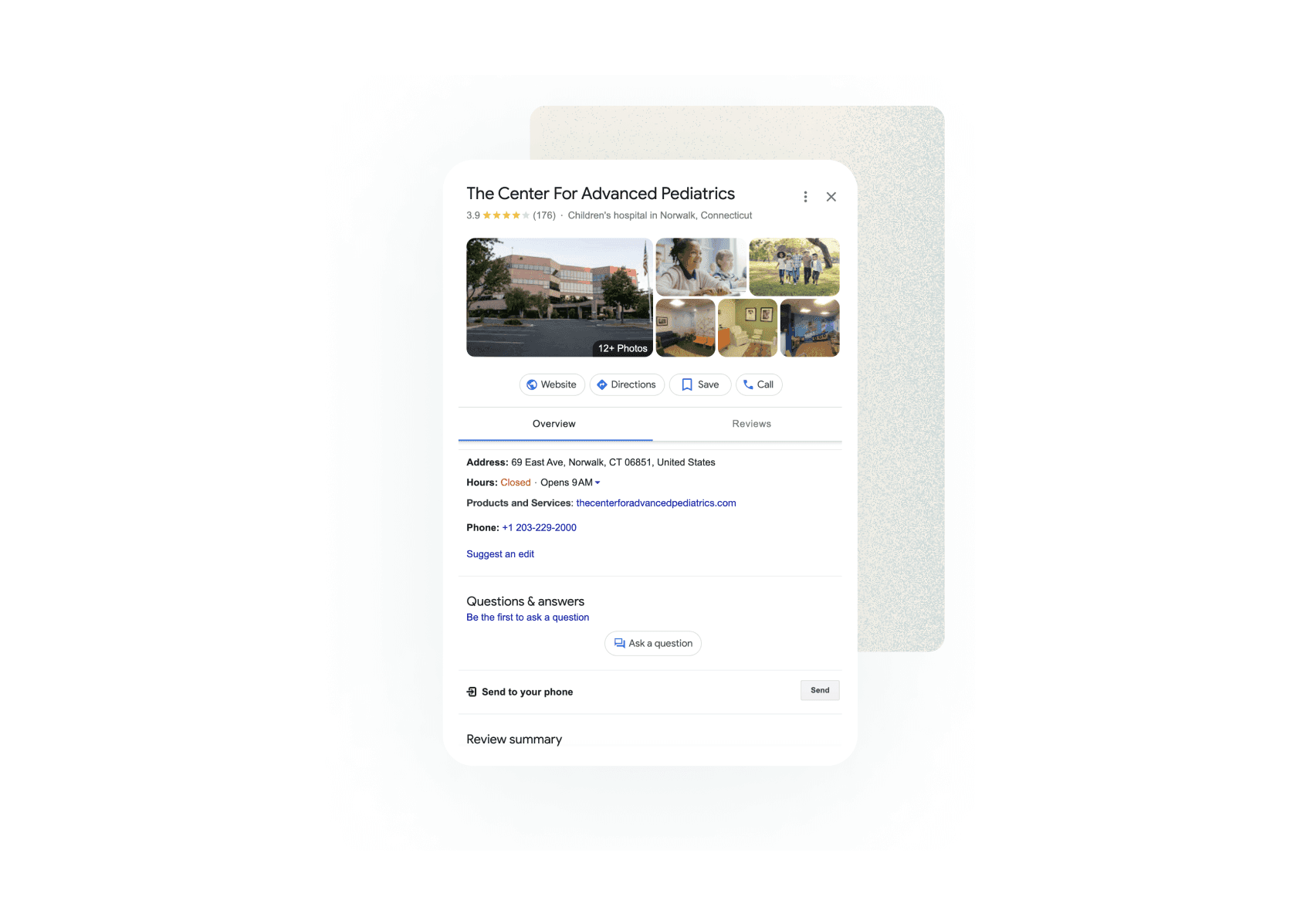
- Claim and verify your medical practice Google listing.
- Add or confirm your office location, business hours, and specialty to ensure these details show up in filtered searches.
- Update your Google Business Profile listing regularly with new photos, direct links to your website, and detailed content about your practice.
- Add a few questions and answers to your Google Business Profile’s Q&A section to address common patient inquiries proactively.
- Enable appointment booking through your profile listing to capture patient interest without friction.
Proactively manage your online reputation
- Ask each patient for feedback after their visit with a simple, automated online survey.
- Monitor any online patient comments, feedback, or reviews on a daily basis.
- Reply to negative reviews swiftly and respectfully, and offer to resolve any issues directly with patients offline.
- Thank reviewers who leave feedback and add the best patient testimonials to your website.
- Use an AI tool to identify trends in reviews, and then use patient feedback to improve your healthcare practice.
3. Improve the patient experience for long-term growth
Patient retention is critical for continued growth. Tebra’s 2025 survey data reveals that an excellent provider experience (69%) and easy scheduling (54%) are top reasons patients return for multiple visits.
Patients now expect convenience, and they aren't afraid to look elsewhere to find it. In fact, a stunning 65% would switch doctors to get easier ways to book appointments and contact a practice. The following tactics are essential to modernize your patient experience and build long-term loyalty.
"An excellent provider experience (69%) and easy scheduling (54%) are top reasons patients return."
Offer convenient online scheduling
- Give patients the opportunity to book or request an appointment 24/7 via your practice website.
- Enable online appointment requests via Google and other business listing websites that offer the functionality.
Send automated appointment reminders
- Send automated appointment reminders via email and two-way text messaging.
- Enable patients to confirm, cancel, or reschedule their appointments digitally.
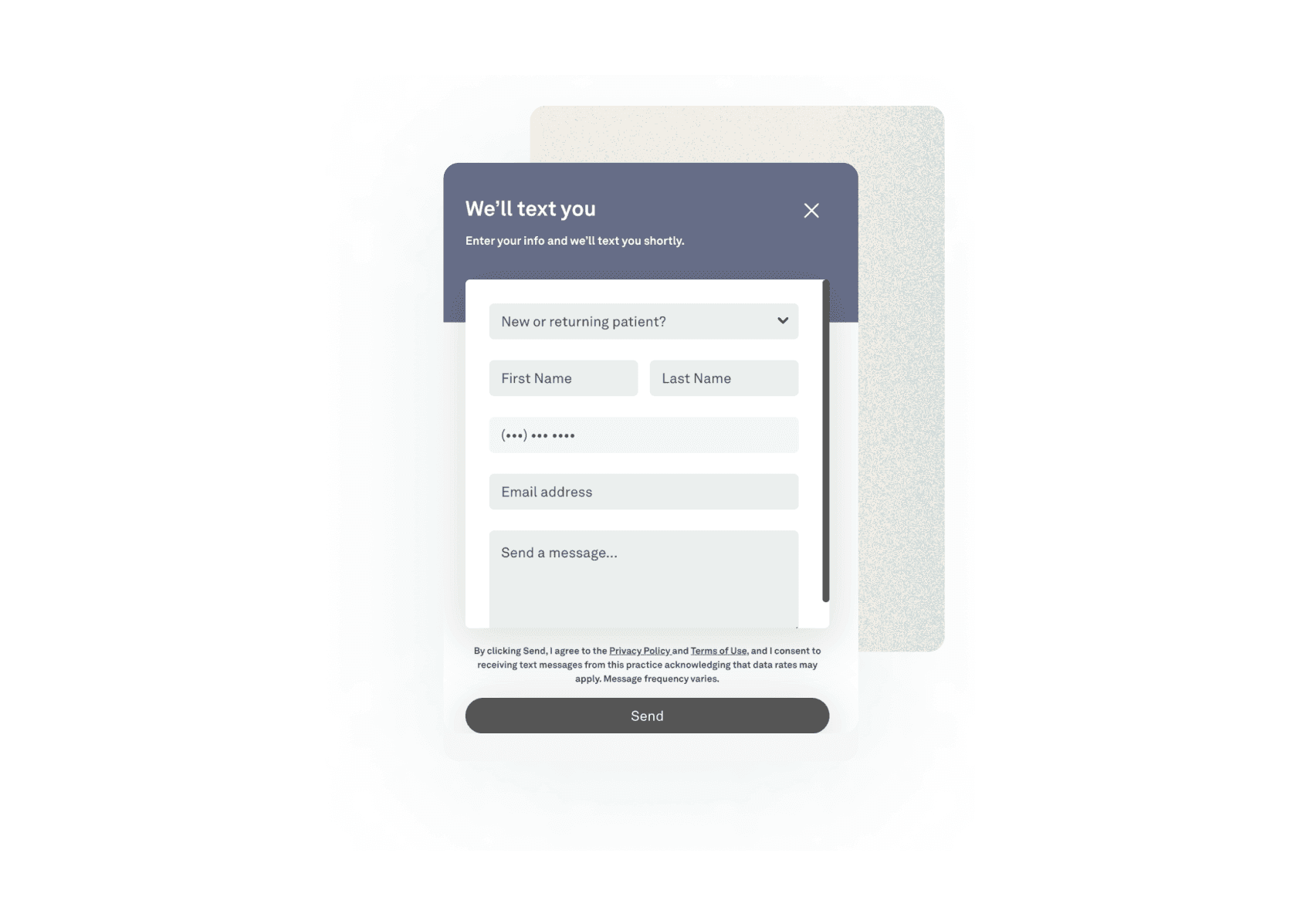
Communicate via text messaging
- Give patients a call-to-text option so they can avoid waiting on hold.
- Use a secure text messaging platform for appointment requests, quick questions, and sending post-visit feedback surveys.
Provide telehealth options
- Offer telehealth options for appropriate visit types, reducing wait times and patient no-shows.
- Create a seamless telehealth experience by sending patients a unique video link that requires no software download or log in.
Accept digital patient payments
- Have the ability to create and send digital invoices via email or text message.
- Invite patients to pay their bills online, helping increase speed to payment.
Increase patient engagement with email and social media
- Set up an email newsletter to send regular, segmented emails to your patients and stay top-of-mind between appointments.
- Pick one social media channel and build engagement with new and current patients by posting at least twice a week.
- Write blogs about common patient questions or concerns and share them in emails and on social media.
4. Streamline operations and front-office efficiency
Eliminating time-consuming, manual tasks is a strong strategy for practice growth. The administrative burden is immense. Tebra's 2025 data found that 88% of providers feel repetitive documentation is their biggest time-waster. This inefficiency also impacts patients, with 37% expressing frustration over "having to call for things that should be online."
By automating tedious front-office tasks, you can reduce administrative strain, improve staff and patient satisfaction, and free up valuable time for patient care.
"88% of providers feel repetitive documentation is their biggest time-waster."
Empower your front-office staff to save time and accomplish tasks with less work
- Send automated appointment reminders to patients, eliminating hours of manual phone call work from your staff’s day.
- Send digital registration and intake forms before appointments, optimizing convenience for staff and patients while reducing check-in delays and manual errors.
- Manage your patient payment process digitally by sending invoices via text or email.
5. Track and analyze practice growth metrics
Data, rather than guesswork, drives a successful growth strategy. Patient retention is fragile, and the reasons patients leave are often operational issues that can be tracked and improved. According to Tebra's 2025 Patient Perspectives survey, top reasons patients have left a provider include slow or no response to questions or concerns (31%) and a lack of follow-up (29%).
Tracking key performance indicators, from patient satisfaction scores to staff time spent on administrative tasks, is the only way to identify and fix those gaps. Setting clear goals and monitoring your progress allows you to refine your approach for sustainable, long-term success.
"Top reasons patients have left a provider include slow or no response to questions or concerns (31%) and a lack of follow-up (29%)."
Set goals and track metrics to help refine your practice success strategy
- Establish your medical practice KPIs, such as wait times, staff response times to inquiries, and patient retention rates.
- Set reasonable growth targets by month, quarter, or season to create clear benchmarks for success.
- Monitor your performance data on an ongoing basis and use the insights to refine your strategy and make informed business decisions.
Printable practice growth checklist
Use the following checklist to review which tactics you’ve already completed, as well as those you’ll need to tackle in 2026 to attract new patients and keep them coming back. Consider each item an opportunity to grow your practice this year and beyond.
1. Optimized healthcare practice website
I've optimized my practice website for the best possible rankings in search results.
- All web pages have a helpful title, well-written meta description, and URLs that answer search queries.
- My website features rich content about my practice and services, with a single page dedicated to each service.
- The site has a responsive design — it adapts to any browser size to look and work great on any device.
My website conveys a professional, modern brand.
- It includes high-quality photos that showcase my office (interior and exterior), staff, and services.
- It prominently features testimonials that demonstrate high patient satisfaction.
- Blog posts and content establish my medical expertise and answer patients’ most common questions.
My practice website is optimized to convert visitors into patients.
- My website includes prominent CTAs that drive appointment bookings.
- Patients can click to call or text my practice right from the website.
- Patients can easily book online, and their appointments sync to the practice schedule.
2. Positive, influential online reputation
I have claimed my profiles on healthcare, business, and directory websites.
- I have claimed my professional profile on each website where my practice and provider listing appears.
- Each profile includes correct contact information (name, office address, phone number, and URL) and business hours.
- Each profile has rich, detailed content and high-quality photos.
I have claimed and audited my practice’s Google Business Profile listing.
- I have claimed our listing.
- Our listing includes office location, business hours, and specialty.
- I regularly update our Google Business Profile with new photos and rich content.
- I have added a few questions and answers to our profile's “Questions & Answers” section.
- Patients can book an appointment through our Google Business Profile.
My practice has a business page on Facebook.
- Our Facebook page includes contact information and recent photos of our practice and providers.
- I regularly post useful news and other information to my Facebook followers.
- I have enabled reviews on my Facebook business page.
I proactively manage our online reputation.
- We monitor online patient comments, feedback, or reviews on a daily basis.
- I reply to negative reviews swiftly and respectfully, and work to resolve any issues directly with patients offline.
- I thank reviewers who give positive feedback and add patient testimonials to my practice website.
3. Modern patient experience
My practice offers online scheduling.
- Patients can book appointments directly via our practice website, 24/7.
- Patients can book or request appointments via Google and a variety of third-party websites.
We send appointment reminders to reduce no-shows and improve each patient’s experience.
- My practice sends multiple automated appointment reminders via email and two-way SMS.
- Patients can confirm, cancel, or reschedule their appointments digitally.
Our patients can easily share post-appointment feedback.
- Patients have the opportunity to provide feedback through multiple channels, including email and SMS.
- Patients can easily share their experiences on review websites.
4. Streamlined front office
My front office staff have the technology to accomplish tasks with less work, in less time.
- My practice sends automated appointment reminders, so staff does not have to manually contact patients.
- Online appointment bookings automatically sync with our appointment calendar.
- Patients can fill out registration and intake forms online before appointments, saving time.
- My practice uses email marketing campaigns to share medical and practice information with patients and to drive patient recall and retention.
5. Actionable metrics
My practice tracks business performance metrics, including patient acquisition and retention goals.
- We have set specific, reasonable, time-bound growth targets.
- We regularly review performance data to refine the practice's growth strategy.
Takeaways for medical practice growth in 2026
Growing a medical practice in 2026 requires a holistic approach that blends a strong digital presence with operational excellence and a modern patient experience. By focusing on building a high-performing website, managing your online reputation, enhancing patient convenience, streamlining administrative tasks, and tracking and acting on key metrics, you create a sustainable foundation for growth. Use the above checklist as your roadmap to not only attract patients but also keep them coming back.

You might also be interested in
- Medical practice growth through competitive differentiation: Strengths like same-day appointments or telehealth are powerful marketing tools when your competitors don’t offer them.
- How to get more online reviews — and why it matters for your medical practice: Having consistent, positive online reviews is essential to helping your medical practice rank well on Google. Try these techniques to get more patient reviews.
- Strategies for doctors to get 5-star patient reviews: Make a lasting impression on potential patients and improve your online reputation.
- Current Version – Nov 18, 2025Written by: Jean LeeChanges: Updated to reflect the most recent information available.
- Nov 15, 2025Written by: Ryan YatesChanges: Updated to reflect the most recent information available.
- Nov 01, 2024Written by: Ryan YatesChanges: Updated to reflect the most recent information available.

Subscribe to The Intake: A weekly check-up for your independent practice