- From the 2020–2021 flu season to the 2024–2025 flu season, influenza vaccination rates for American adults dropped 24%.
- Flu vaccinations during the 2025–2026 season are on pace to be the lowest in the last 7 years.
- 54% of Americans have gotten 2 or fewer flu shots over the past 5 flu seasons; however, 51% have gotten or plan to get their seasonal influenza immunization this year.
- The top reasons Americans skip the flu shot are that they think they don’t need it (42%), they forget or don’t make time to get it (41%), and they’re concerned about side effects (26%).
Flu shot uptake across the United States has been quietly slipping, season after season. This trend has implications for public health and for the private practices working to keep patients well.
To understand what's behind the dip in vaccinations, Tebra analyzed several years of CDC FluVaxView surveillance data and surveyed more than 1,000 Americans about their views on the flu shot and vaccination habits. The findings highlight both the scope of the decline and what private practices can do to help turn it around.
A sharp and steady drop in flu vaccinations
After a spike during the onset of the COVID-19 pandemic, the numbers show a clear downward trend in flu shot uptake over the last 5 years.
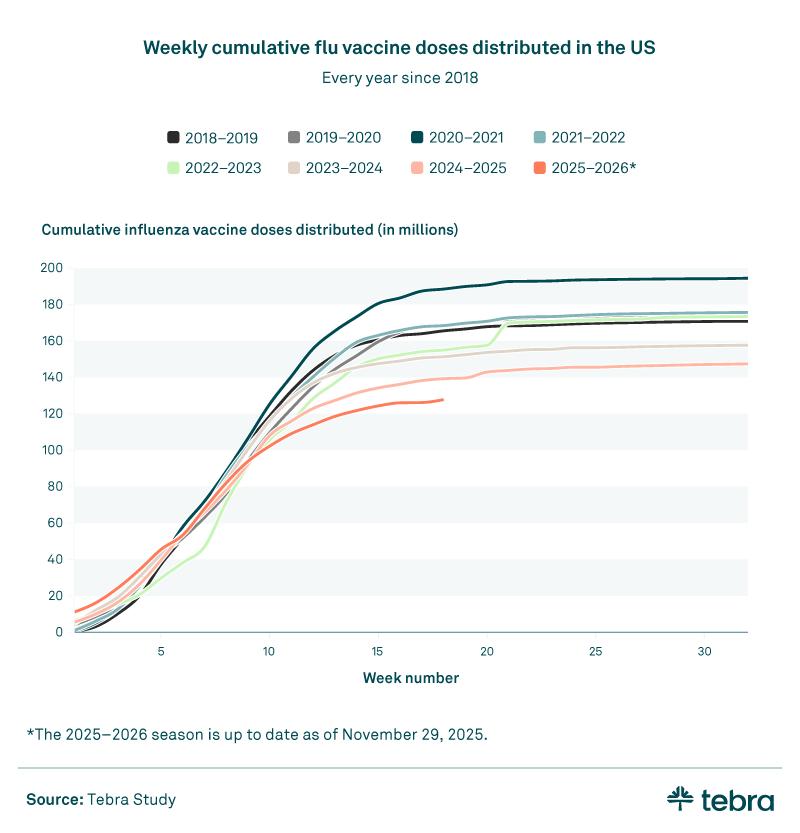
Between the 2020–2021 and 2024–2025 flu seasons, national flu vaccination rates fell by 24%. This drop follows a high point in the first year of the pandemic, when awareness of infectious diseases was top of mind.
Now, looking ahead to the 2025–2026 flu season, vaccination rates are on pace to reach their lowest levels in 7 years — a concerning development for continuity of care and the protection of vulnerable patients.
Shifting behaviors and beliefs about the flu shot
Even though many people report getting sick, flu shot hesitancy remains high, particularly among younger generations.

In the last 3 months, 44% of Americans reported getting sick, and 69% said someone close to them had also fallen ill. Gen Z was the most affected, with 59% personally getting sick. They were also the least likely generation to have consistently gotten a flu shot over the past 5 seasons (18%).
That said, Gen Z is showing signs of change: 54% have gotten or plan to get their flu shot this year, making them the most likely generation to do so for the current season. Baby Boomers had the strongest long-term track record, with 46% getting vaccinated every year for the past 5 flu seasons.
Across the board, 54% of Americans have gotten 2 or fewer flu shots in the past 5 years. More than half (51%) have gotten or plan to get vaccinated this season. Political affiliation also appears to play a role. Liberals (62%) were nearly twice as likely as conservatives (33%) to get or plan to get the flu shot this year.
As for why people skip the vaccine, the most common reasons were:
- Perceived lack of clinical necessity (42%)
- Scheduling friction (41%)
- Concern about side effects (26%)
However, most Americans still believe in the shot's value: 88% said the flu vaccine is safe, and 82% said it's effective.
Trust, media, and the evolving vaccine mindset
Americans' relationship with vaccines has changed in subtle ways since the COVID-19 pandemic, but trusted guidance from providers still matters most.
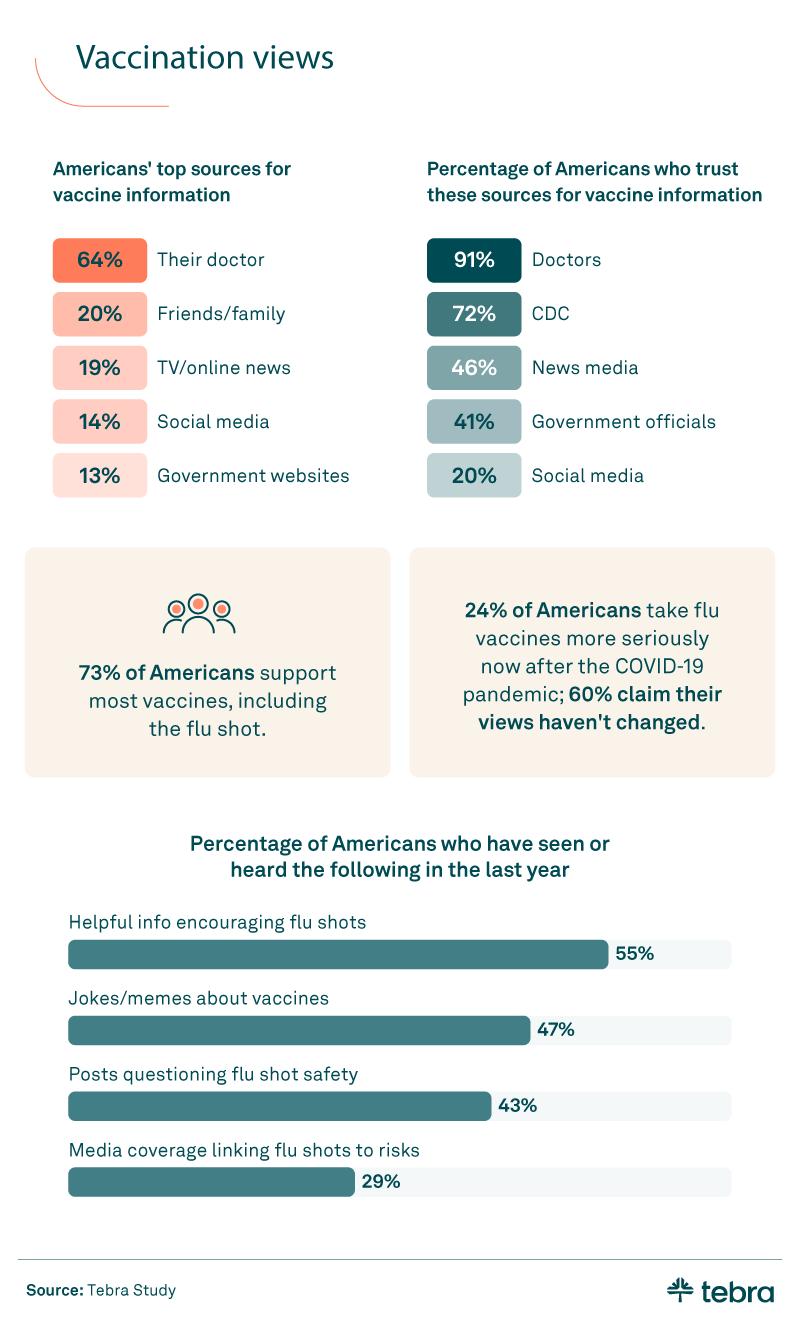
Nearly three-quarters of Americans (73%) support most vaccines, including the flu shot. For 24%, the COVID-19 pandemic made them take flu vaccines more seriously. However, the majority (60%) said their views on the flu shot haven't changed.
When it comes to vaccine information, doctors lead the way. Sixty-four percent of Americans said their physician is their primary source of vaccine information, and 91% trust their doctor most for authoritative clinical guidance, far more than any other source.
Still, misinformation and media influence are factors to be aware of and address with patients as needed. Nearly half of Americans (47%) said they've seen or heard jokes or memes about vaccines in the past year. These seemingly lighthearted messages can subtly shape perceptions. Another 43% have seen social media posts that questioned flu shot safety.
Rebuilding confidence in a critical seasonal safeguard
The drop in flu vaccinations in recent years isn't due to a single factor. It's a mix of forgetfulness, changing habits, generational trends, and evolving trust. Many patients still believe in the safety and effectiveness of the flu shot, but that belief doesn't always translate into action.
For private practices, this presents both a challenge and an opportunity. By offering proactive education, seamless point-of-care access, and trusted communication, providers can help patients reconnect with this vital line of defense. Making flu shots more accessible and emphasizing their value can help reconnect communities with this essential protection.
Methodology
For this study, Tebra leveraged the CDC FluVaxView dashboard to analyze the influenza vaccination administration for every flu season since 2018. We also surveyed 1,002 Americans about their views and perspectives on flu shots and vaccinations.
About Tebra
Tebra, headquartered in Southern California, empowers independent healthcare practices with cutting-edge AI and automation to drive growth, streamline care, and boost efficiency. Our all-in-one EHR and billing platform delivers everything you need to attract and engage your patients, including online scheduling, reputation management, and digital communications.
Inspired by "vertebrae," our name embodies our mission to be the backbone of healthcare success. With over 165,000 providers and 190 million patient records, Tebra is redefining healthcare through innovation and a commitment to customer success. We're not just optimizing operations — we're ensuring private practices thrive.
Fair use statement
If you'd like to share these insights, you're welcome to do so for noncommercial purposes. Please link back to Tebra and provide proper attribution.



Subscribe to The Intake: A weekly check-up for your independent practice