
As an independent healthcare provider, you face tough competition from massive health systems, retail clinics, and private equity groups. To stay viable, clinical excellence is no longer the only requirement. According to Sam Patel, founder of Astra Culture, success now requires a skill that doctors aren’t taught in medical school: You must adopt a CEO mindset.
“Just knowing medicine is certainly not enough. Consumers are looking for more than just care. They want an experience,” Patel says. “They want a really good intake, check out, and follow-up process. All of that is very much a business owner mindset. It is now becoming very evident that any medical provider needs some general knowledge on how to own and operate a business.”
How to adopt a CEO mindset in healthcare
What can you do to get into a CEO mindset as a provider? It starts with understanding your practice as a business entity and staying one step ahead of competitors. This involves learning about basic accounting, medical practice marketing, and team leadership.
You can bridge any knowledge gaps through certificate or higher education programs, self-directed online courses, or consultants to improve business acumen. Patel, for instance, is currently enrolled in a 2-year program at Harvard Business School designed to strengthen entrepreneurial leadership.
“Physicians are always learning and educating themselves,” Patel says. “It doesn’t always need to be about medicine.”
| Not sure whether you have a CEO mindset? Take our free self-assessment for independent physicians. |
The benefits of a business-first perspective
When you adopt a CEO mindset, you gain the clarity needed to lead a more efficient, profitable practice. Patel notes that this shift allows you to:
- Make more informed decisions. Does your practice need an additional physician or physician assistant? Do you need to cut staff? “With good data, you can make better decisions,” he says.
- Retain staff. “Team members are looking for a positive leader,” he says. “If they see you’re stagnant — and the practice is becoming more burdensome with volume — they’re going to go somewhere else. To retain team members, you need to become a better businessperson.”
- Transition to retirement on your terms. A refined business with clean books is a more valuable asset when it's time to exit or sell.
- Understand granular business performance. You'll know if your practice is growing, plateauing, or failing before it's too late to pivot.
Having a CEO mindset also changes how you view your revenue cycle. Instead of approaching billing as a burden, a CEO mindset allows you to treat revenue cycle management as a strategic system that protects cash flow, independence, and patient trust.
With this mindset, you and your team can track RCM metrics weekly, invest in technology to promote upstream revenue protection, and make every financial decision through the lens of maintaining long-term independence.
 What Our Customers Are Saying
All case studies
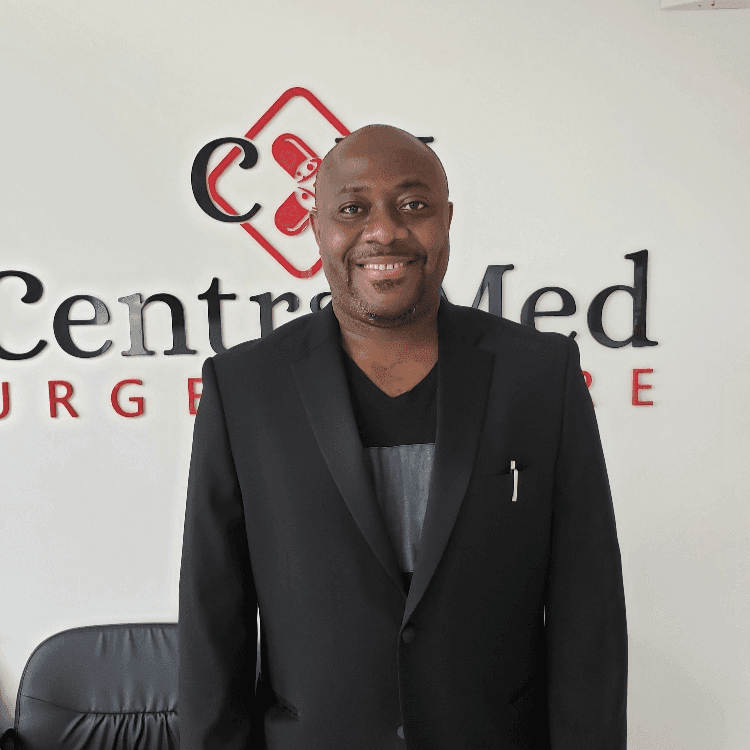


Think strategically for your practice's financial sustainability
When you adopt a CEO mindset, you aren’t afraid to evolve your business to improve the patient experience and capture more revenue, says Patel.
“A lot of people are starting to eliminate insurance — or only keep certain payers that truly pay well — and then go into a hybrid model,” Patel explains. This shift is becoming more common in specialties like family medicine, internal medicine, OB/GYN, dermatology, optometry, chiropractic, and dentistry.
“Over the last 18 months, our consulting firm has skyrocketed with inquiries from people who are in 100% insurance-dependent practices who are saying, ‘I want to diversify into a cash-based model,' whether it’s direct primary care, concierge medicine, or wellness and aesthetics,” he says. “Everyone is starting to wake up to this idea because insurance reimbursement is declining. One cash-based patient could be equivalent to 5 insurance-based patients. When you look at this math, it starts to make sense.”
If you wonder if your patients will pay for cash-based services, Patel says the answer is yes — and physicians with a CEO mindset are already embracing this.
“GLP-1s have fueled this influx of people going into the cash-based world,” he adds. While most adults who have taken GLP-1 drugs say their insurance covered at least a part of the cost of these drugs, about a quarter (27%) of adults with health insurance say they paid the full cost of the drugs themselves, according to a recent poll.
Increasing deductibles are another driver. “The new generation of 20-, 30-, and 40-year-olds are saying, ‘My insurance barely covers anything, my deductible is so high, and it takes me 9 months to a year to even get seen. Why don’t I just pay out of pocket and go into the cash-based model?’”
Transition your practice to a new business model
If you're ready to transition your practice to a hybrid cash model, Patel's best advice is to do it slowly.
“People always think that it’s a very sharp U-turn, but it’s not. It’s a transition,” he says. “[Physicians] usually start with simple services that are very popular like GLP-1s, hormone replacement therapy, weight loss therapy, vitamin therapy, or other wellness-related services that generate a good amount of income, are easy to do, and require very limited training.”


"People always think that it’s a very sharp U-turn, but it’s not. It’s a transition."
In a hybrid practice, you maintain an insurance-based division alongside a wellness or cash-based division. When insurance doesn’t cover a specific service, you can steer patients toward cash-based offerings. This improves both your revenue and their access to care.
You don't need every patient to opt in for this to work. “If you can get 1 of 5 patients to go into the cash-based model, that will substantially help," Patel says.
The math is in your favor: A hybrid or concierge model allows you to increase revenue and decrease volume — an inverse relationship most physicians know is impossible to achieve in a fee-for-service model.
Patel says most concierge practices cap out at 400–500 patients and still generate $1 million annually. An insurance-based practice would need to manage 2,000–3,000 patients to generate that same amount of revenue.
Next steps: Ready to lead as a CEO?
The shift from "provider" to "provider-CEO" is the most effective way to protect your clinical autonomy.
"It’s never too late to learn how to [...] become a better CEO."
“It’s never too late to learn how to go into this model and become a better CEO,” says Patel. “There’s a lot of value in making the transition, and it’s not as hard as everyone thinks because there are a lot of resources out there.”
Want to learn how Tebra can help your practice boost patient retention and grow as you explore a CEO mindset and new business models? Book a personalized demo today.

You might also be interested in
- Diagnose and improve your practice’s revenue streams: Discover how to diversify your revenue, lower operating costs, optimize billing, and outshine your competitors with this free 6-chapter workbook.
- Unlock new revenue: Streamline supplement prescribing through your EHR.
- Medical practice growth through competitive differentiation: Strengths like same-day appointments or telehealth are powerful marketing tools when your competitors don’t offer them.



Subscribe to The Intake: A weekly check-up for your independent practice