
- 63% of patients have ghosted a doctor — stopped seeing them without officially informing the office — at least once.
- 54% of patients have dropped a doctor after just one visit.
- 30% of patients have avoided or dropped a doctor because of a negative online review.
- 75% of patients would prefer a textable office number over in-person support.
- 26% of patients said online reviews matter more than a doctor’s credentials or years of experience.
- 57% of doctors said digital presence now outweighs experience when it comes to patient trust.
Patients are no longer choosing healthcare providers solely based on credentials or referrals. Reviews, convenience, online scheduling and communication options, and how well a provider shows up online all play a role in the success of a patient encounter.
Tebra surveyed 805 patients and 251 healthcare providers to the drivers behind patient attrition and uncover why doctors get ghosted. Private practices that adapt to new norms and solve certain pain points will be the ones to thrive.
What drives patients to leave a provider
Patient loyalty can be fragile, and first impressions matter. Many are quick to leave or disengage if their expectations around evaluation and management access and communication aren't met.
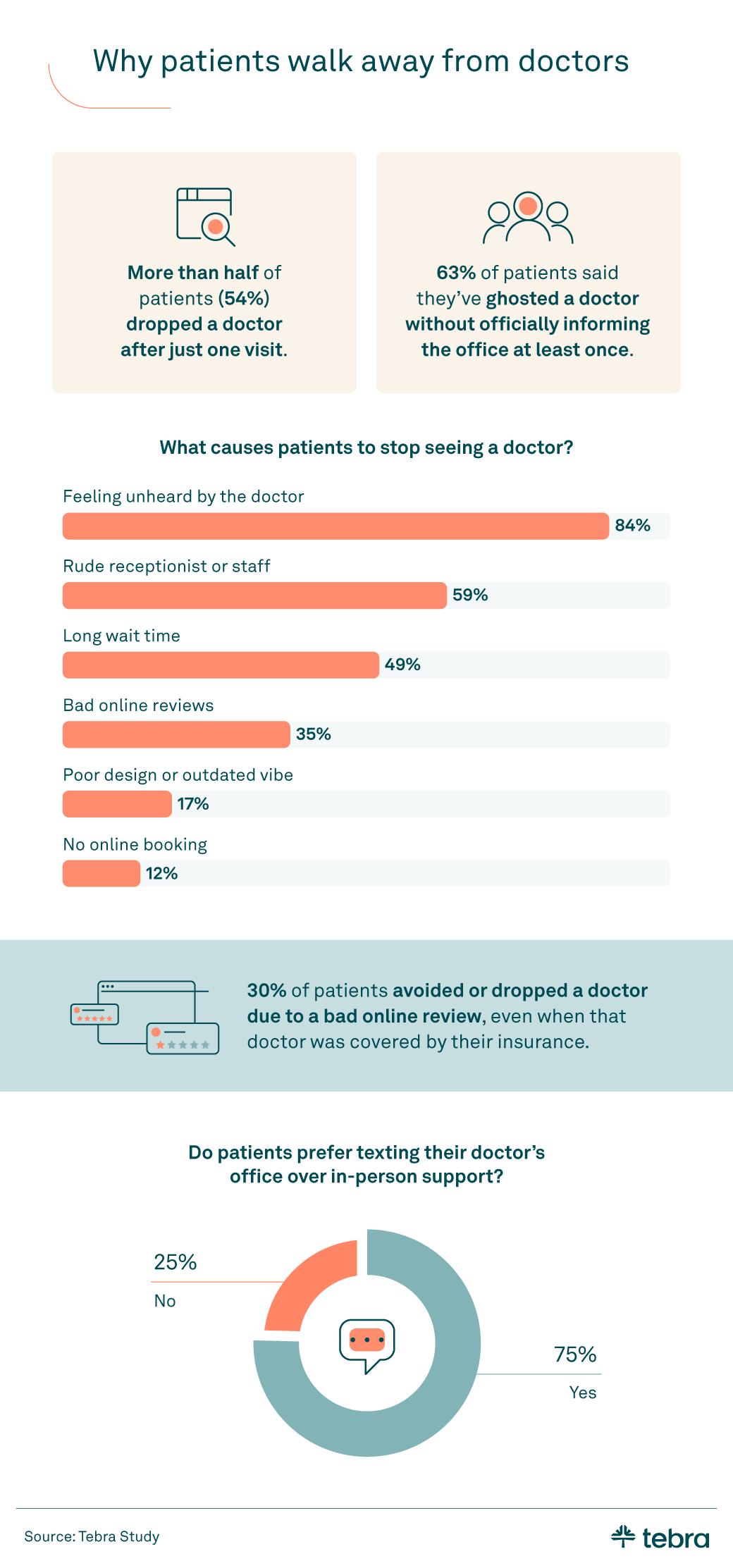
More than half of patients (54%) dropped a doctor after just one visit, and nearly two-thirds (63%) said they had ghosted a provider without notice. Women were more likely than men to drop a doctor after a single appointment (57% vs. 50%). Ghosting habits by generation were as follows:
- Millennials (72%)
- Gen X (58%)
- Gen Z (55%)
- Baby Boomers (42%)
The digital trail matters too: 30% of patients said they had avoided or dropped a doctor after reading a negative online review, even before meeting them. Among Millennials, 58% had dropped a doctor after one visit, a slightly higher rate than Gen Z (55%) and Gen X (54%).
Patients also want new ways to communicate: 75% said they would prefer two-way-texting an office number to in-person support. Gen Z led this trend, with 87% preferring to text their doctor's office.
How patients choose doctors
Online presence now shapes trust as much as (or more than) clinical experience, depending on the patient. If your patient portal isn’t the easiest way to book, patients will find a competitor who has one.
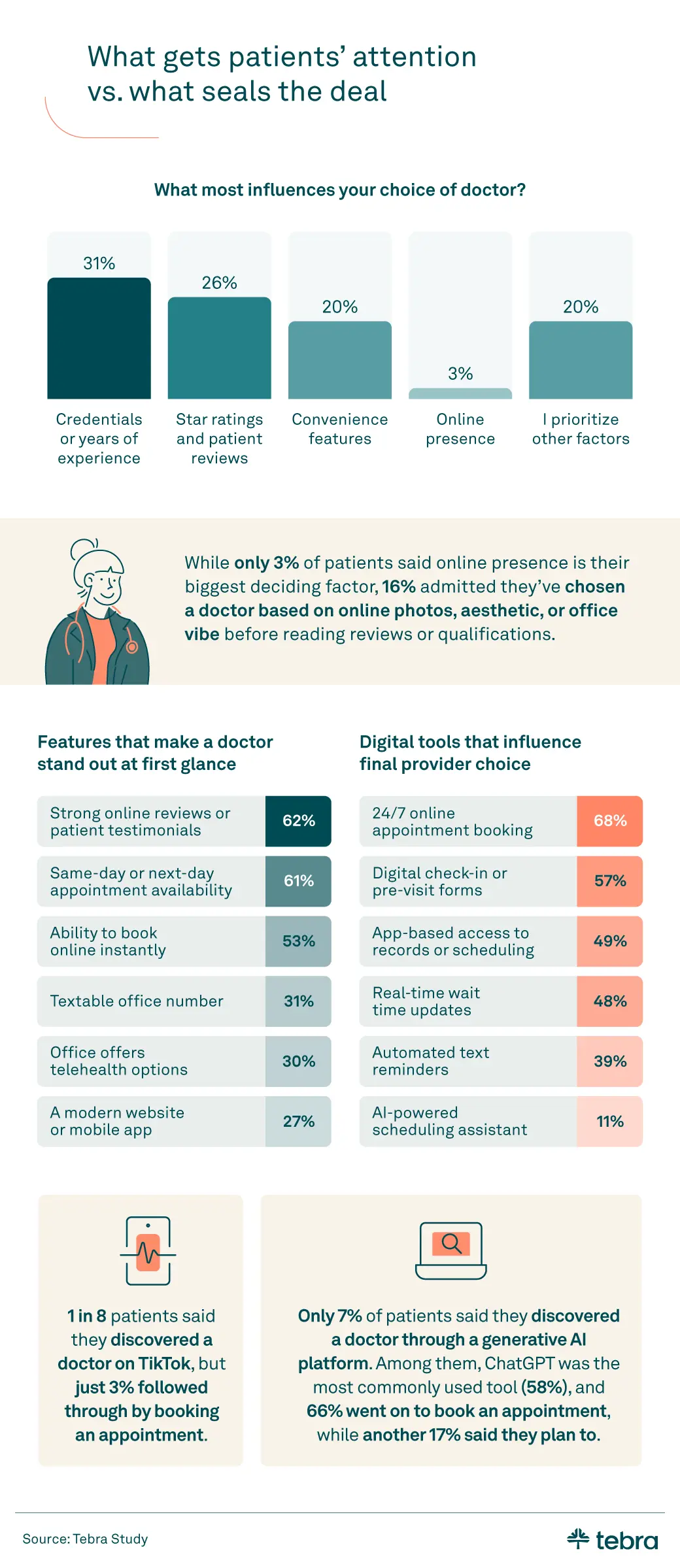
More than 1 in 4 patients (26%) said online reviews mattered more to them than a doctor's credentials or years in practice. Among Gen Z patients, 29% said reviews were the biggest influence when choosing a provider — more than any other generation.
Patients reported using a mix of sources to find new providers, including:
- Insurance portals (50%)
- Word of mouth (50%)
- Referrals from other doctors (50%)
- Google (48%)
Patients also relied on walk-in or urgent care clinics (20%), platforms like Zocdoc (12%), social media (10%), and generative AI tools like ChatGPT (7%).
Convenience is key. Nearly 1 in 5 patients (17%) said the inability to book online would strongly push them to switch doctors. Men were more likely than women to say this (20% vs. 14%), and Millennials (21%) and Gen Z (18%) were the most likely overall to expect online booking.
How doctors are responding
To stay competitive, providers are being pushed to think like marketers and show up where patients are searching, including search results and review platforms.
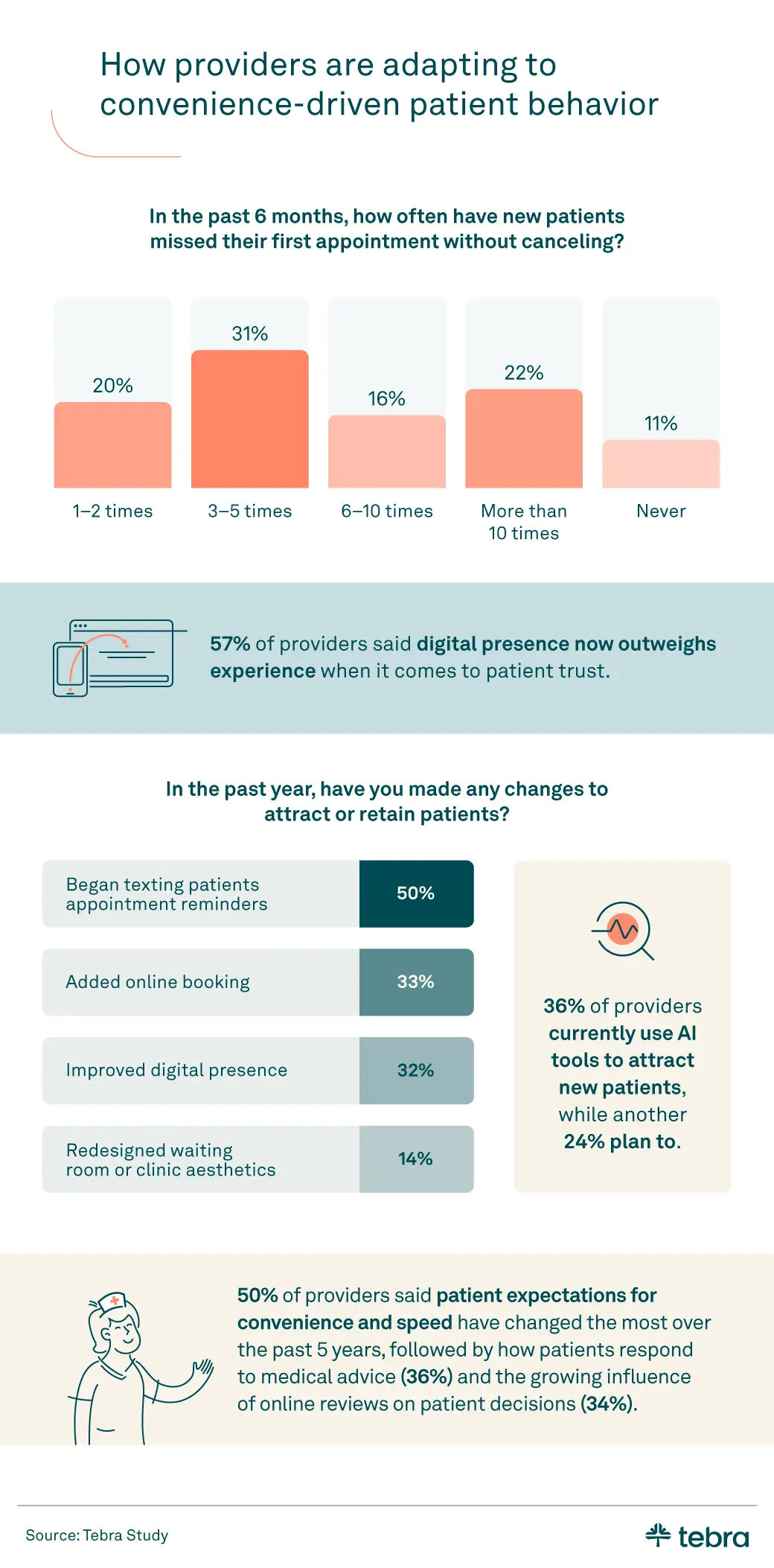
To stay competitive and attract patients, doctors said they've been advised to improve:
- Communication protocols (35%)
- Review management (31%)
- Social media presence (23%)
More than half of doctors (57%) said that digital presence now outweighs experience when it comes to building trust with new patients. Another 65% believe patient relationships are becoming "too transactional" to build lasting trust. Looking ahead, some doctors are investing in new digital strategies.
Over one-quarter (28%) said appearing in AI-generated search results was a top or moderate priority for 2026, with most focusing on ChatGPT (53%) and Google AI Overviews (49%). Another 29% said AI visibility was a low priority, highlighting a divide in how providers view emerging tech.
Building lasting connections in a ratings-first era
The patient-doctor relationship is evolving fast. Patients now expect the same seamless experience they get from other service industries, from clear online reviews to secure text-based support and instant booking. Doctors are being asked to show up, stand out, and compete in new digital spaces.
To succeed in this shifting landscape, private practices must embrace digital tools that make it easier to engage patients and build trust from the first search to the final follow-up. The human connection is still central to care, but now, it starts online.
Methodology
Tebra surveyed 805 Americans who currently have a primary care doctor or regularly see a healthcare provider, along with 251 healthcare providers, to examine how digital tools, aesthetics, and online reputation are reshaping the patient-doctor relationship.
Among patient respondents, 14% were Gen Z, 49% were Millennials, 26% were Gen X, and 11% were Baby Boomers. Data was collected in January 2026 (US-based respondents).
About Tebra
Tebra, headquartered in Southern California, empowers independent healthcare practices with cutting-edge AI and automation to drive growth, streamline care, and boost efficiency. Our all-in-one EHR and billing platform delivers everything you need to attract and engage your patients, including online scheduling, reputation management, and digital communications.
Inspired by "vertebrae," our name embodies our mission to be the backbone of healthcare success. With over 165,000 providers and 190 million patient records, Tebra is redefining healthcare through innovation and a commitment to customer success. We're not just optimizing operations — we're ensuring private practices thrive.
Fair use statement
If you'd like to share or reference this data, you're welcome to do so for noncommercial purposes. Please include proper attribution and a link to Tebra.
FAQs



Subscribe to The Intake: A weekly check-up for your independent practice